Pastor Salaries – Balaam, A Prophet for Profit
If you have been in churches for years and something about how money is handled has started to weigh on you, this article is for you. You are not alone in noticing.
This is one factor, among many, that contributes to people walking away from organized religion. It is not the only factor, and for many it is not the deciding one. But for some it is real, and it deserves an honest look.
Why Balaam?
You might wonder why an article about modern pastor salaries leads with an Old Testament prophet. The answer is simple: the New Testament directly names Balaam as the archetype for a kind of religious leader the early church was told to be on guard against. Peter, Jude, and Jesus Himself (in Revelation) all call out “the way of Balaam” by name. If apostolic concern about this pattern is in the foundational documents of the faith, modern believers who notice the same pattern are not being paranoid. They are being attentive.
Who was Balaam?
The story is told in Numbers 22-24. Balaam was a non-Israelite prophet who genuinely heard from God. His gift was real. It was also for sale.
When Balak, king of Moab, offered rewards to curse Israel, God told Balaam no. Balaam relayed the answer. But when Balak raised the price, Balaam’s heart was exposed:
“If Balak would give me his house full of silver and gold, I cannot go beyond the word of the LORD my God, to do less or more.” (Numbers 22:18)
Notice what Balaam did not say. He did not say I am not for hire. He left the door open with the silver-and-gold framing — I have a price.
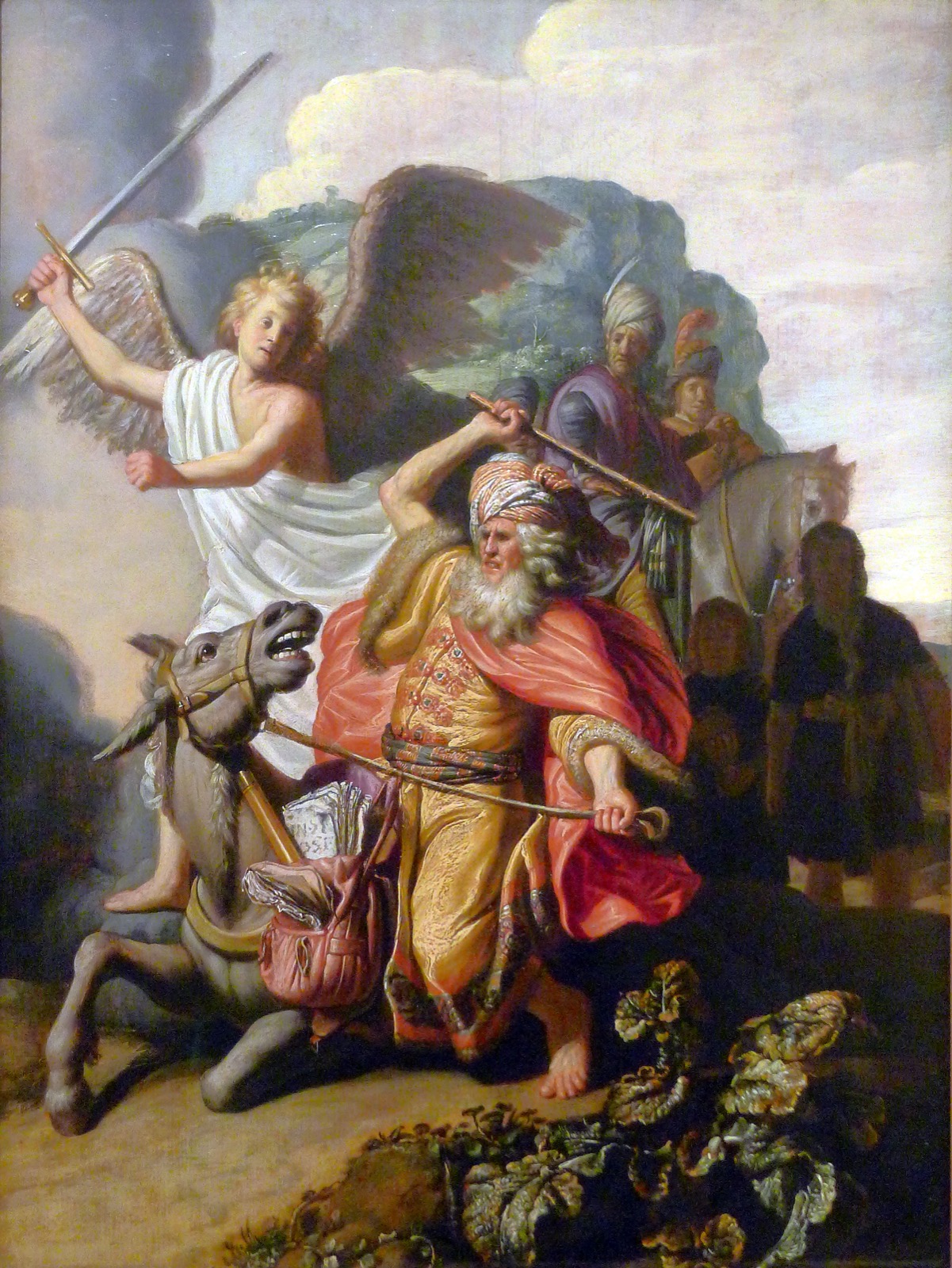
On the road to Moab, the famous scene that Rembrandt and many others later painted: the angel of the LORD stood in Balaam’s path with a drawn sword. Balaam could not see it. His donkey could. Three times the donkey refused to move; three times Balaam beat her. Finally God opened the donkey’s mouth, and she spoke. Then God opened Balaam’s eyes (Numbers 22:21-35). The donkey saw what the prophet for hire could not.
Balaam ended up blessing Israel three times instead of cursing them. But the story did not end there. Numbers 31 reveals what he did when he could not curse Israel for money directly: he counseled Balak on how to corrupt Israel from within. Twenty-four thousand Israelites died in the resulting plague.
What the New Testament says about it
Three apostolic voices, including the Lord Jesus, name Balaam directly:
“Following the way of Balaam… who loved the wages of unrighteousness.” (2 Peter 2:15)
“They have gone in the way of Cain, and ran greedily after the error of Balaam for reward.” (Jude 1:11)
“Thou hast there them that hold the doctrine of Balaam…” (Revelation 2:14, Jesus speaking)
The same New Testament that warns about Balaam also lays down the qualifications for elders. Three apostolic letters list not greedy of filthy lucre as a hard requirement for leadership (1 Timothy 3:3, Titus 1:7, 1 Peter 5:2). The standard was clear from the beginning: if a man loved money, he did not belong leading a flock.
Leaders who want to dominate
Alongside the money concern, the New Testament also addresses leaders who want to dominate. Jesus said it plainly:
“The princes of the Gentiles exercise dominion over them… But it shall not be so among you: whosoever will be great among you, let him be your minister.” (Matthew 20:25-26)
John named one such domineering leader by name: Diotrephes, “who loveth to have the preeminence” (3 John 1:9-10). Diotrephes refused to welcome other Christians, refused even the apostle John, and excommunicated members who disagreed. The pattern is familiar today: pastors who cannot be questioned, boards that serve at the pastor’s pleasure, members disciplined for asking financial questions.
Jesus foretold this
If any of this troubles you, you are in good company. Jesus and the apostles warned that it would happen:
“There shall be false teachers among you… through covetousness shall they with feigned words make merchandise of you.” (2 Peter 2:1-3)
“After my departing shall grievous wolves enter in among you, not sparing the flock. Also of your own selves shall men arise, speaking perverse things, to draw away disciples after them.” (Paul to the Ephesian elders, Acts 20:29-30)
You are allowed to notice.
What pastors actually make today
National research from the National Association of Church Business Administration, Christianity Today’s Church Law & Tax, the Vanderbloemen Compensation Study, and Leadership Network shows U.S. senior pastor compensation in 2024-2025 by church size:
| Church size (weekly attendance) | Reported package | Median |
|---|---|---|
| Small (under 100) | $50,000–$65,000 | $58,000 |
| Average (100–250) | $65,000–$90,000 | $75,000 |
| Medium (300–500) | $90,000–$120,000 | $105,000 |
| Large (1,500–3,000) | $150,000–$250,000 | $200,000 |
| Megachurch (5,000+) | $300,000–$1,000,000+ | $500,000 |
Those figures include base salary plus housing allowance, but leave out benefits, retirement, and side income. Adding them back gives a more honest comparison. Pastors also benefit from the parsonage tax exemption (IRS Section 107) that no other profession receives, plus church-paid benefits (health insurance, retirement, sabbatical, expenses) and side income from honorariums, books, and speaking fees:
| Church size | Reported | + Housing tax | + Benefits | + Side income | Effective total |
|---|---|---|---|---|---|
| Small | $58,000 | +$4,000 | +$25,000 | +$2,000 | ~$89,000 |
| Average | $75,000 | +$6,000 | +$30,000 | +$8,000 | ~$119,000 |
| Medium | $105,000 | +$9,000 | +$35,000 | +$15,000 | ~$164,000 |
| Large | $200,000 | +$18,000 | +$50,000 | +$40,000 | ~$308,000 |
| Megachurch | $500,000 | +$45,000 | +$60,000 | +$300,000 | ~$905,000 |
Megachurch pastors with bestselling books and active speaking circuits frequently clear $1.5-3 million when all streams are tallied. These figures are conservative.
And here is what the people in those congregations earn:
| Church size | Median household income of congregants |
|---|---|
| Small | $65,000 |
| Average | $75,000 |
| Medium | $80,000 |
| Large | $90,000 |
| Megachurch | $100,000 |
(National median household income is approximately $80,000.)
What is reasonable, what is excessive
A family of four in most U.S. cities needs $80,000-$100,000 to live comfortably. Against that:
- A small or average church pastor at $89-119k effective is reasonable.
- A medium-church pastor at $164k is upper-middle class. Still reasonable for many congregations.
- A large-church pastor at $308k is in the top 5% of U.S. household income. Questions become fair.
- A megachurch pastor at $905k+ is in the top 1%. This is where reasonable people start writing different checks.
The line between acceptable and excessive depends on context. But when the man preaching giving makes many times what his congregation makes, when compensation is concealed, when ministry begins to look like a paid platform — that is no longer pastoral compensation. It is what Peter, Jude, and Jesus warned about.
Another layer: the tithing demand
There is one more piece that compounds the salary problem, and it deserves to be named. The same churches that conceal what their pastor and staff are paid will often, from that same pulpit, teach the congregation that they are biblically required to give ten percent of their income — backed by a single verse:
“Bring ye all the tithes into the storehouse, that there may be meat in mine house, and prove me now herewith, saith the LORD of hosts, if I will not open you the windows of heaven, and pour you out a blessing, that there shall not be room enough to receive it.” (Malachi 3:10)
Malachi 3 was written to Israel under the old covenant. It addressed Levitical priests who were holding back tithes from other Levites who depended on them. It was about livestock and crops paid to a priesthood that no longer exists. It was not written to the New Testament church. The New Testament never teaches Christian tithing. It teaches generous, cheerful, Spirit-led giving (2 Corinthians 9:7) — and the giving in the early church was largely directed to the poor and to traveling workers, not to a salaried clergy class.
When a modern pastor — paid many times what his congregation makes, with compensation kept private — uses Malachi 3 to demand a tithe and promises that God will “open the windows of heaven” in return, the arrangement is no longer just compensation. The money is hidden, but the verse is repurposed to extract more of it. That pattern is the layer that pushes many sincere believers from quiet concern to walking away. Once you have seen it clearly, you cannot un-see it.
(For a fuller look at what the New Testament actually teaches about giving, see The Lie Called Tithing.)
Most pastors are not Balaam
Let’s say this plainly. Most pastors are not Balaam. Most are not in ministry for the money. The vast majority earn modest salaries, serve small congregations faithfully, and are not the subject of New Testament warnings — they are the people the warnings were given to protect.
The reason scripture takes the trouble to warn about the Balaam pattern is precisely because it is a temptation. Temptations exist because they are real possibilities. Peter, Jude, and Jesus named Balaam because the danger was real enough to call out plainly.
One reason among many
This article is about one factor, among many, that contributes to people walking away from organized religion. For many it is not the main factor. But for some it is, and the concern is biblical, not bitter.
If that is you, you are not in rebellion. You are doing what the New Testament invited believers to do from the beginning — examine the spirits, weigh what you see against scripture, and refuse to fund what does not match.
Where this leaves you
Christ is still on the throne. The Holy Spirit is still your guide. You can still give generously, support faithful workers, help the poor, and gather with other believers — “where two or three are gathered together in my name” (Matthew 18:20).
You do not need to fund the Balaam pattern to be faithful to Christ. The apostles never asked you to.
“He hath shewed thee, O man, what is good; and what doth the LORD require of thee, but to do justly, and to love mercy, and to walk humbly with thy God?” (Micah 6:8)
That is the assignment. It always has been.