Worship as a Production
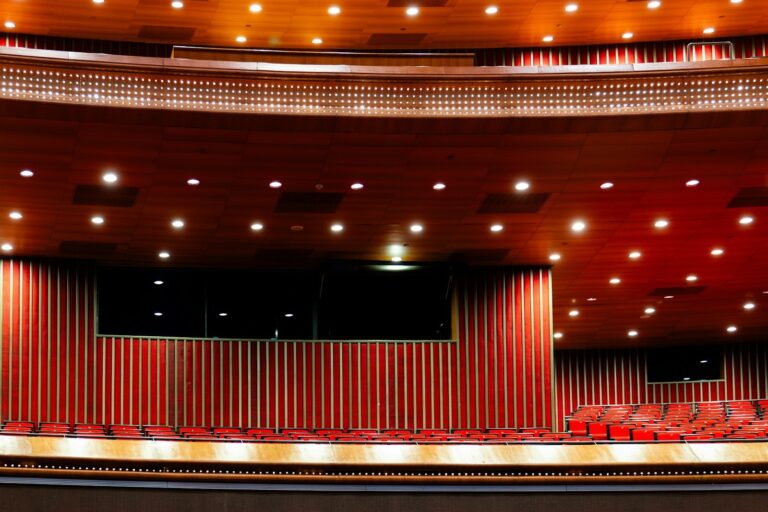
The lights dim. Fog drifts across the stage. A countdown clock hits zero, the band launches into the opening number, and screens the size of billboards fill with motion graphics. Modern worship can be genuinely moving — and it can also be indistinguishable from a concert. For a growing number of believers, that resemblance has stopped feeling like excellence and started feeling like a performance.
What worship was meant to be
When Jesus spoke about worship, He pushed past place and spectacle to something interior:
“But the hour cometh, and now is, when the true worshippers shall worship the Father in spirit and in truth: for the Father seeketh such to worship him. God is a Spirit: and they that worship him must worship him in spirit and in truth.” — John 4:23–24
“In spirit and in truth” — not in production value. The thing God seeks is the orientation of the heart, which is precisely what no lighting rig can supply or fake.
When God rejects the music
There is a startling passage where God tells His people, through Amos, that He cannot stand their worship gatherings — not because the music was bad, but because the heart behind it was hollow:
“I hate, I despise your feast days… Take thou away from me the noise of thy songs; for I will not hear the melody of thy viols.” — Amos 5:21,23
Isaiah recorded the same complaint in words Jesus would later quote: “this people draw near me with their mouth, and with their lips do honour me, but have removed their heart far from me” (Isaiah 29:13). Polished sound, distant heart — God is not impressed by the production. He is, if anything, grieved by it.
The God who looks past the surface
The whole logic of a performance is to be seen and admired. The whole logic of the gospel runs the other way:
“…for man looketh on the outward appearance, but the LORD looketh on the heart.” — 1 Samuel 16:7
Jesus warned against doing spiritual things “to be seen of men” and told His followers to pray in private, behind a closed door (Matthew 6:5–6). The early church gathered for mutual building-up, not a show: “when ye come together, every one of you hath a psalm, hath a doctrine… Let all things be done unto edifying” (1 Corinthians 14:26). Worship was participatory, not a stage with an audience.
Not a war on excellence
This is not an argument that music should be clumsy, or that beauty has no place, or that everyone who runs a soundboard is leading people astray. Skill offered to God is a good thing. The concern is what happens when the experience becomes the point — when a congregation is moved by the lights and the swell of the music and mistakes that feeling for the presence of God. The early Christians had none of the equipment and somehow had all of the substance. Many who have walked away are not rejecting worship. They are looking for the kind Jesus described: in spirit, and in truth, with nothing manufactured in between.